It's Not Just a Shirt: The Real Reason Closet Cleanses Are So Emotionally Exhausting
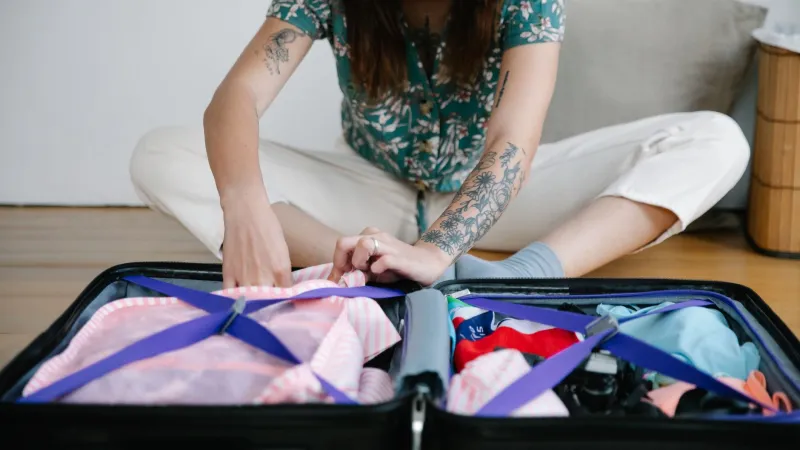
Everybody makes it look so easy. A trash bag, a donate pile, a before-and-after reel with a satisfying time-lapse. Thirty minutes later, someone's closet is transformed and their whole life apparently is too.
But then you try it. You pull out a hoodie you haven't touched in two years, and suddenly you're nineteen again, sitting in someone's car outside a party, and putting it in the donation bin feels genuinely wrong. So it goes back on the shelf. Again.
Here's the thing nobody says out loud: clothes aren't just fabric. They're memory storage. They're identity artifacts. They're proof that certain versions of you existed. And no amount of Marie Kondo-ing is going to change that — not until you actually reckon with what's really going on when you can't let something go.
Why "Does It Spark Joy" Isn't Enough
The spark joy framework was a cultural moment, and honestly, it helped a lot of people start. But for Gen Z — a generation that came of age during constant identity flux, economic uncertainty, and a social media landscape that made every aesthetic feel both deeply personal and completely disposable — it's not a complete enough question.
Because sometimes a piece doesn't spark joy. It sparks guilt. Or grief. Or a complicated mix of who you used to be and who you're still figuring out how to become.
That oversized band tee from a show you went to with an ex? It doesn't spark joy. But throwing it away feels like erasing something. The blazer you bought when you were trying to look like you had your life together for a job you hated? You never wear it. But getting rid of it feels like admitting defeat.
These aren't irrational feelings. They're actually really human ones. And any decluttering process that doesn't make room for them is just going to leave you with a half-cleaned closet and a low-grade sense of shame.
The Guilt Pile Is the Most Important Pile
Before you sort anything into keep, donate, or toss — make a fourth category. Call it the Guilt Pile. These are the pieces you feel obligated to keep. The gifts you never liked. The expensive mistake you're holding onto because throwing it away feels like throwing away money. The "aspirational" items you bought for a life you haven't lived yet.
Putting them all in one place is clarifying. Because when you see them together, you realize how much closet real estate — and mental energy — you're spending on things that make you feel bad rather than good.
The guilt pile isn't about deciding what to do with everything at once. It's about naming the emotion so it stops having so much power over you. Once you can say "I'm keeping this out of guilt, not because I love it," you've actually made progress — even if the item stays for now.
Nostalgia Deserves a Seat at the Table
Some pieces are worth keeping purely for sentimental reasons, and that's not a failure to declutter. It's just honesty.
If you have a jacket from your first solo road trip or a pair of jeans that were your whole personality junior year, those aren't clutter. They're archives. The goal isn't to strip your closet of every trace of who you used to be — it's to make sure the past isn't crowding out the present.
Try this: give yourself a small, intentional nostalgia section. A drawer, a shelf, a single box. Curate it like a tiny personal museum. When something earns a spot there, it's a conscious choice rather than avoidance. And everything else that was hiding behind nostalgia? Suddenly it's a lot easier to release.
The Identity Shift Problem Nobody Talks About
One of the sneakiest reasons closet cleanses stall out is that editing your wardrobe forces you to confront who you are right now — and sometimes that's uncomfortable, especially if you're mid-transition.
If you've been going through a style evolution, a life change, a move, a breakup, a graduation, or just a general sense of becoming someone slightly different than you were — your closet is probably a time capsule of multiple selves. Some of those selves feel finished. Some feel unresolved. And sorting through them while also trying to figure out who you're becoming is genuinely a lot.
Permission to go slow. You don't have to resolve your entire identity to clean out a closet. Instead, try asking a different question: Does this fit the life I'm actually living right now? Not the life you had. Not the life you're planning. The one you're in today.
That reframe alone can move a lot of things from the maybe pile into clarity.
A Permission Slip for Letting Go
Sometimes you just need someone to say it's okay. So here it is:
You are allowed to donate the dress you wore to homecoming even if it was a good night. The night still happened. The memory lives in you, not in the zipper.
You are allowed to get rid of the clothes from a version of yourself you've outgrown — the hyper-trendy phase, the "trying to fit in" era, the "dressing for someone else" years. Releasing those pieces isn't betraying that person. It's graduating from them.
You are allowed to let go of the expensive item that was a mistake. You already paid for the lesson. Keeping the item doesn't undo the cost — it just keeps charging you in closet space and low-key regret every time you see it.
And you are allowed to keep things that don't "make sense" by anyone else's standards. Closets aren't rational. They're personal.
Reframe the Whole Thing
Here's the shift that actually makes closet editing sustainable: stop thinking of it as subtraction and start thinking of it as curation.
You're not losing things. You're clarifying what belongs in the story you're telling about yourself right now. Every piece you release creates more breathing room — not just physically, but mentally. When you open your closet and everything in it is something you actually want to wear, getting dressed stops being a daily negotiation with your past selves.
That's the real payoff. Not a perfectly organized Instagram-worthy wardrobe. Just a closet that feels like you — the current you, the real you, the one who doesn't need to hold onto old proof to know who they are.
The cleanse that actually sticks isn't the one you power through in a single afternoon. It's the one you do with honesty, a little patience, and the understanding that your clothes have been carrying a lot. Let them down gently. Then let them go.