Own Less, Feel More: The Real Reason a Smaller Wardrobe Hits Different
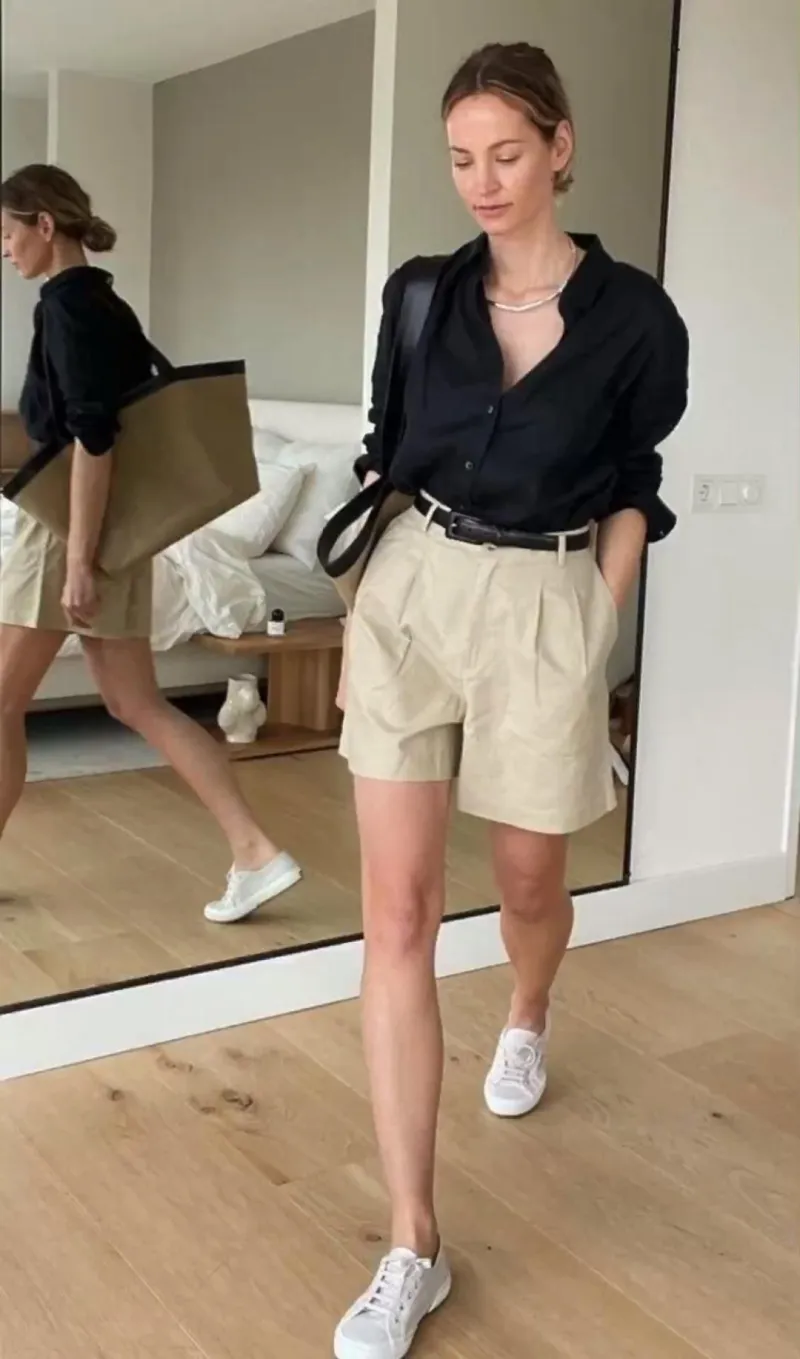
Photo: minimalist wardrobe aesthetic young woman confident simple outfit, via i.pinimg.com
Here's something nobody tells you when you're doom-scrolling through haul videos at 1am: the more stuff you pile into your closet, the harder it gets to feel like yourself. It sounds backwards. More options should mean more freedom, right? Except that's not really how it plays out when you're standing in front of a rack stuffed with clothes you barely recognize, feeling completely stuck on what to wear.
This isn't just a vibe — there's actual science behind it. And once you get it, you kind of can't unsee it.
Your Brain Is Getting Tired Before You Even Leave the House
Decision fatigue is real, and fashion is one of its sneakiest triggers. Every choice you make throughout the day — what to eat, what to say, what to do — draws from the same mental energy pool. Psychologists have studied this for years, and the data keeps pointing to the same conclusion: the more micro-decisions you make early in the day, the worse your judgment gets as the hours go on.
Your closet is basically a decision minefield. When you've got forty-seven tops and no clear sense of what actually belongs together, you're burning through mental bandwidth before you've even had coffee. By the time you finally land on an outfit, you're already a little drained. And that low-key exhaustion? It shows. Not in a dramatic way, but in the way you carry yourself, the way you second-guess the look three times before noon.
A tighter, more intentional wardrobe short-circuits all of that. Fewer choices means faster decisions — and faster decisions made with clarity actually feel more confident than labored ones made from a sea of options.
The Coconut Core Principle: Stripped Down, Still Standing Out
There's something deeply aligned between the coconut aesthetic and minimalist dressing that goes beyond surface-level vibes. Think about it — a coconut doesn't need embellishment. It's exactly what it is: simple on the outside, rich on the inside, completely self-contained. That's the energy a curated closet gives you.
When you strip your wardrobe down to pieces that genuinely reflect who you are — not who the algorithm suggested you be last Tuesday — something shifts. You stop performing your identity and start inhabiting it. The clothes you actually reach for, the ones that feel right without explanation, those are the ones doing the real work. Everything else is just noise.
Gen Z is clocking this in a big way. The cultural pivot away from fast fashion isn't just environmental (though that's huge). It's also deeply personal. There's a growing collective exhaustion with the pressure to constantly consume, constantly update, constantly keep up. And the response has been to pull back — not out of defeat, but out of intention.
Curation Is a Power Move
Let's reframe something. Choosing less isn't settling. It's editing. And editing is one of the most underrated creative skills there is.
The best stylists don't work by adding — they work by subtracting. They look at what's there and ask what actually needs to stay. That process of elimination, when you apply it to your own closet, is genuinely transformative. Because what's left after you remove the impulse buys, the guilt pieces, the stuff you're keeping because you spent money on it — what's left is you.
A wardrobe built around ten pieces you love is infinitely more powerful than one built around a hundred pieces you feel meh about. And the confidence that comes from opening your closet and immediately knowing what you're working with? That's not a small thing. That's the difference between walking into a room and owning it versus walking in and hoping nobody notices you're not sure about the outfit.
The 'Enough' Shift Is Already Happening
Scroll through the corners of TikTok and Instagram that aren't trying to sell you something, and you'll find a quiet but growing movement around the idea of enough. Enough clothes. Enough options. Enough of the cycle where you buy something to feel good, feel good for approximately four days, and then feel the pull to buy something else.
People are building capsule wardrobes and actually sticking to them. They're thrifting with a list instead of a vibe. They're getting dressed in under ten minutes and feeling sharper for it. The aesthetic might look different from person to person — some are going full coastal minimalism, some are leaning into maximalist expression within a small number of pieces — but the underlying philosophy is the same. Know what you have. Love what you have. Wear what you have.
This isn't about being boring or playing it safe. It's about knowing yourself well enough to stop outsourcing that knowledge to whatever's trending.
How to Actually Start
You don't have to gut your entire closet in one Saturday afternoon (though honestly, that can be cathartic). Start smaller. Pull out five pieces that you reach for constantly — the ones that require zero deliberation. Look at them together. What do they have in common? That pattern, whatever it is, is your actual style. Not the aspirational version you've been chasing. The real one.
From there, the question for every other piece in your closet becomes simple: does this fit into that picture, or is it just taking up space? If it's the latter, it goes. And when you're shopping in the future — whether that's thrifting, investing in something new, or trading with friends — that same filter applies.
It's not a rigid system. It's a clearer lens. And once you're looking through it, getting dressed stops feeling like a problem to solve and starts feeling like an expression that's already there, just waiting to come through.
Less Clutter, More You
The confidence paradox of minimalist dressing isn't really a paradox once you live it. Owning less means knowing more — more about your taste, your values, your aesthetic identity. And that self-knowledge is what actually projects when you walk into a space. Not the number of items in your wardrobe. Not the price tags. Not the volume.
Just you, clearly. And that's always going to be enough.