Wardrobe DNA: Cracking the Code to a Closet That's 100% You

Photo: Benlisquare, CC BY-SA 4.0, via Wikimedia Commons
Let's be honest — most of us have been building our wardrobes backwards. We scroll, we see something cute, we buy it, and then three weeks later it's sitting in a pile on the floor because it doesn't actually go with anything we own. Sound familiar? The problem isn't your taste. It's that nobody ever handed you a real framework for building a closet that makes sense for you.
That's exactly what the Coco approach is about. Not chasing micro-trends. Not dressing for the algorithm. Just figuring out who you actually are and letting your wardrobe reflect that — with intention, versatility, and a little sun-soaked confidence.
Start With Your Life, Not Your Pinterest Board
Before you even think about shopping, take a hard look at how you actually spend your days. Are you a college student bouncing between early morning lectures and late-night hang sessions? A creative freelancer working from coffee shops in Brooklyn or Austin? Someone who loves weekend hikes but also lives for a good rooftop moment?
Your wardrobe should serve your real life — not some aspirational version of it. Grab a notebook (or your Notes app, no judgment) and write down the five settings you find yourself in most often during a typical week. Be specific. "Going out" is too vague. "Low-key bar nights where I want to look effortless but still put-together" is useful.
This exercise immediately starts filtering what you actually need versus what just looks good on someone else's grid.
Identify Your Aesthetic Anchors
Here's where it gets fun. Think of your personal style as having a core — maybe two or three words that capture the feeling you want your outfits to give off. Not a trend name, but a vibe. Words like "sun-faded and easy," "sharp but a little unexpected," or "earthy with an edge" are way more useful than "Y2K" or "coastal grandmother."
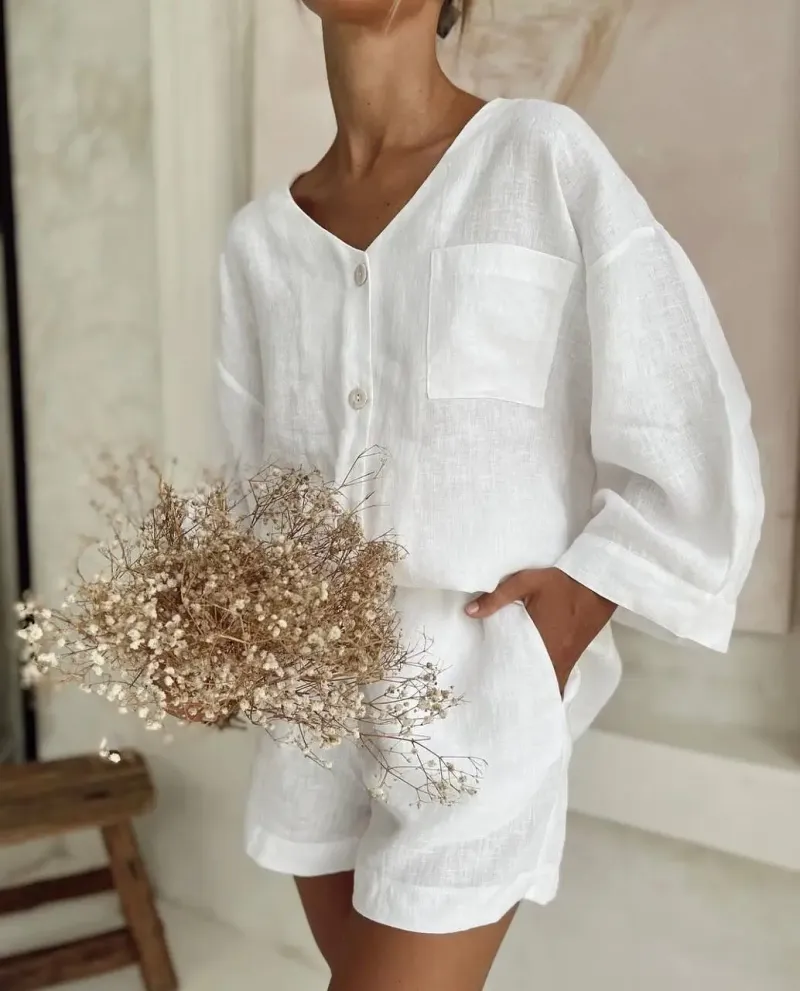
For a lot of us drawn to the Coco aesthetic, that foundation tends to lean into warmth — sandy neutrals, creamy whites, warm taupes — the kind of palette that feels like late afternoon light no matter where you are. These tones work as your wardrobe's backbone because they naturally coordinate with each other. A coconut-white linen shirt goes with everything from wide-leg khakis to a bold printed midi skirt. That's the power of building from a neutral base.
But here's the key: neutrals don't mean boring. Your accent pieces — the pieces that actually express your personality — are where you get to go bold. A pair of electric blue mules. A vintage band tee in a graphic that genuinely means something to you. A statement bag in a saturated terracotta. These are the punctuation marks in your style sentences.
The 10-Piece Reality Check
Capsule wardrobes get a bad rap for being too restrictive, but the point was never to live in ten identical gray t-shirts. The real goal is to own pieces that work together in multiple combinations — so that even on a rushed Tuesday morning, you can pull something out and feel like yourself.
Here's a loose framework to get you started:
- 2-3 foundational bottoms — think well-fitting jeans in a wash you love, a versatile skirt, or a pair of trousers that can dress up or down
- 3-4 tops that do double duty — a fitted tank, a breezy button-up, a slightly oversized tee with staying power, maybe a knit that works across seasons
- 1-2 layering pieces — a denim jacket, an open blazer, or a lightweight cardigan that adds dimension without effort
- 2 shoes that carry the weight — one casual, one that elevates. You can always add more, but these two should do 80% of the work
- 1-2 statement or accent pieces — the stuff that makes your fits unmistakably yours
The magic isn't in the number. It's in making sure every single item can interact with at least three other things you own. If you pick up a piece and can only think of one outfit it works with, that's a red flag.
Shopping Smarter, Not More
Once you've got your framework, shopping actually becomes easier — and way less expensive. You're no longer buying reactively. You're filling specific gaps.
Before purchasing anything, ask yourself:
- Does this fit the aesthetic anchors I defined?
- Can I build at least three outfits around this right now?
- Is this something I'd still want in two years?
If the answer to any of these is "not really," put it back. Thrift stores, secondhand apps like Depop and Poshmark, and local vintage spots are incredible for finding those anchor pieces at a fraction of retail — especially when you know exactly what you're looking for.
Your Closet Is a Living Thing
The final piece of the puzzle? Your wardrobe isn't a project you finish — it evolves with you. You're allowed to grow out of pieces, shift your aesthetic, and add new dimensions to your style as you change. The goal isn't a perfectly frozen capsule. It's a closet that always feels like home.
Audit it seasonally. Donate what no longer reflects who you are. And every time you add something new, make sure it's earning its place.
Building a wardrobe with intention is one of the quietest, most powerful forms of self-expression you've got. Do it on your own terms — not the trend cycle's.